


Some error occured while loading the Quick View. Please close the Quick View and try reloading the page.
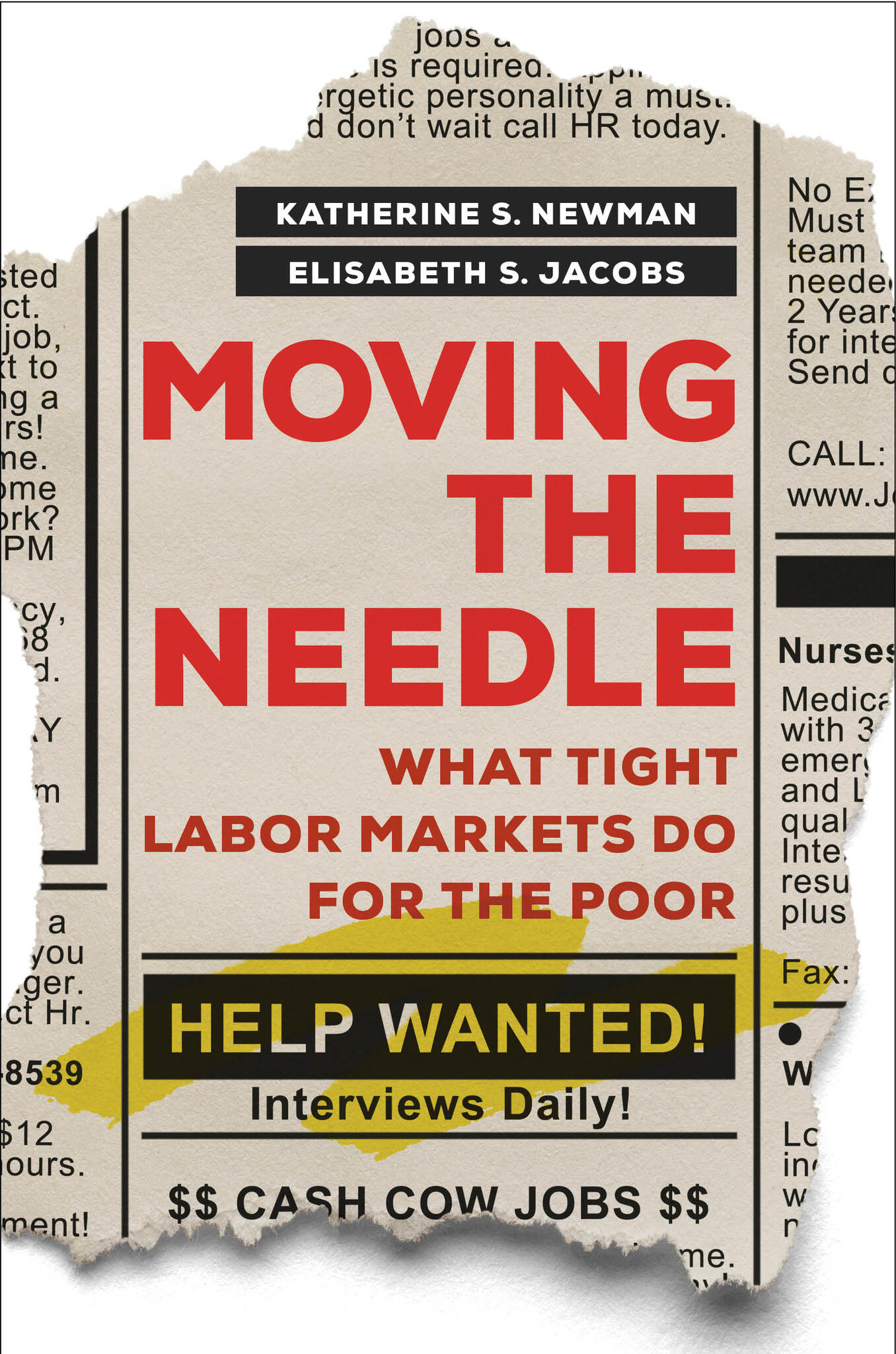
This timely investigation reveals how sustained tight labor markets improve the job prospects and life chances of America’s most vulnerable households.
Most research on poverty focuses on the damage caused by persistent unemployment. But what happens when jobs are plentiful and workers are hard to come by? Moving the Needle examines how very low unemployment boosts wages at the bottom, improves benefits, lengthens job ladders, and pulls the unemployed into a booming job market.
Drawing on over seventy years of quantitative data, as well as interviews with employers, jobseekers, and longtime residents of poor neighborhoods, Katherine S. Newman and Elisabeth S. Jacobs investigate the most durable positive consequences of tight labor markets. They also consider the downside of overheated economies that can ignite surging rents and spur outmigration. Moving the Needle is an urgent and original call to implement policies that will maintain the current momentum and prepare for potential slowdowns that may lie ahead.
Most research on poverty focuses on the damage caused by persistent unemployment. But what happens when jobs are plentiful and workers are hard to come by? Moving the Needle examines how very low unemployment boosts wages at the bottom, improves benefits, lengthens job ladders, and pulls the unemployed into a booming job market.
Drawing on over seventy years of quantitative data, as well as interviews with employers, jobseekers, and longtime residents of poor neighborhoods, Katherine S. Newman and Elisabeth S. Jacobs investigate the most durable positive consequences of tight labor markets. They also consider the downside of overheated economies that can ignite surging rents and spur outmigration. Moving the Needle is an urgent and original call to implement policies that will maintain the current momentum and prepare for potential slowdowns that may lie ahead.

Price: $29.95
Pages: 376
Publisher: University of California Press
Imprint: University of California Press
Publication Date:
28 March 2023
Trim Size: 9.00 X 6.00 in
ISBN: 9780520379107
Format: Hardcover
BISACs:
"The authors’ thoughtful analyses . . . extending well beyond labor market tightness, make this a synthesis that is both timely and valuable"."
Katherine S. Newman is Provost and Executive Vice President of Academic Affairs at the University of California. She is author of fourteen books on topics including the working poor, social mobility, apprenticeship, the impact of regressive taxation, and downward mobility.
Elisabeth S. Jacobs is Senior Fellow at the Urban Institute and cofounder of WorkRise, a research-to-action network on jobs, workers, and mobility, for which she serves as deputy director. She has worked at the intersection of cutting-edge social science and public policy for nearly two decades.
Elisabeth S. Jacobs is Senior Fellow at the Urban Institute and cofounder of WorkRise, a research-to-action network on jobs, workers, and mobility, for which she serves as deputy director. She has worked at the intersection of cutting-edge social science and public policy for nearly two decades.
Contents
List of Tables, Figures, and Maps
Introduction
1. The Dynamics of Tight Labor Markets
2. What Lasts? Durable Effects of Tight Labor Markets
3. Matching Up: How Employers Adapt to Tight Labor Markets
4. Leaning on Intermediaries
5. Entering from the Edge
6. Declining Drama
7. Family and Fortune
8. Policy Lessons from Tight Labor Markets
Appendixes
Personal and Institutional Acknowledgments
Notes
References
Index
List of Tables, Figures, and Maps
Introduction
1. The Dynamics of Tight Labor Markets
2. What Lasts? Durable Effects of Tight Labor Markets
3. Matching Up: How Employers Adapt to Tight Labor Markets
4. Leaning on Intermediaries
5. Entering from the Edge
6. Declining Drama
7. Family and Fortune
8. Policy Lessons from Tight Labor Markets
Appendixes
Personal and Institutional Acknowledgments
Notes
References
Index